After a Storm: How to Check Your Gutters in Northeast Ohio
What to look for from the ground, what each sign means, and what to do next.
Why storms are hard on gutters here
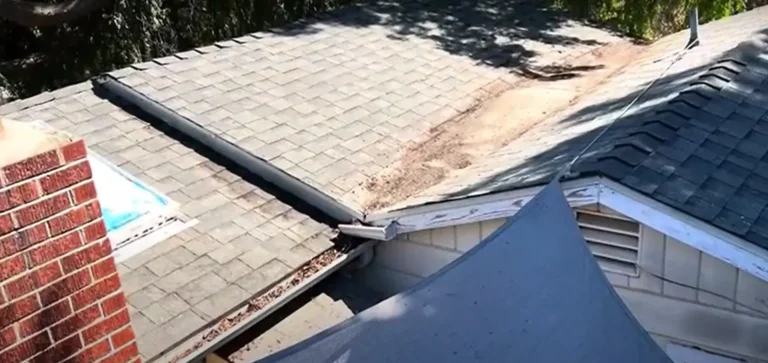
Northeast Ohio gets a bit of everything: summer thunderstorms with strong straight-line winds, hail, heavy autumn rain on top of falling leaves, and winter storms that load roof edges with snow and ice. Gutters take a beating in all of them. They catch falling branches, hold the weight of ice, and get pushed around by wind.
Most storm damage to gutters is easy to spot from the ground, and the sooner it’s found, the cheaper it is to fix. A gutter that has pulled away from the house can soak the fascia, siding and foundation in the very next rain.
Safety first: what not to do
- Stay off the roof and ladder while the roof, gutters or ground are wet, icy or covered in debris.
- Keep clear of downed power lines. If a branch has brought down a line near the gutters, stay away and call the utility.
- Don’t pull on hanging sections. A loose gutter full of water and debris is heavy and can come down suddenly.
- Wait for daylight and calm weather before looking closely.
Everything below can be checked from the ground, a window or a deck.
A 10-minute walk-around after the storm
- Walk the whole house and look along each gutter line. It should be straight, with no dips, gaps or loose ends.
- Look where the gutter meets the roof. A gap between the gutter and the fascia means hangers have pulled out.
- Check every corner and end cap for new drips or separations.
- Follow each downspout from top to bottom. Is it still attached, uncrushed and connected to its extension?
- Look at the ground below each downspout outlet for piles of shingle granules, which point to roof wear from hail or wind.
- Check for branches lying in or on the gutters.
- In the next rain, watch from a window: water should run into the downspouts, not over the edge or behind the gutter.
- Take photos of anything that looks wrong before moving or touching it.
What the damage means, and how urgent it is
| What you see after the storm | What it usually means | How urgent |
|---|---|---|
| A gutter section hanging loose or on the ground | Hangers pulled out by wind, ice or a falling limb | Urgent: keep people away and arrange a repair |
| Water pouring behind the gutter | Gutter pulled away from the fascia, or the drip edge lifted | Soon: water is reaching the fascia and wall |
| A dent or kink in a gutter run | Hit by a branch or hail | Check: water may pool at the dent and overflow |
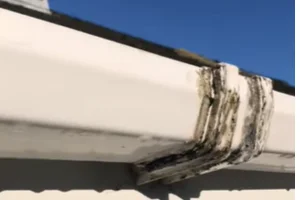
| Seams dripping that never leaked before | Joints twisted by wind or weight | Soon: leaks rot fascia over time |
| A downspout detached or crushed | Wind, ice or a falling limb | Soon: water is dumping at the foundation |
| Piles of shingle granules at downspout outlets | Hail or wind wear on the roof | Check: have the roof looked at too |
| Gutters packed with leaves and twigs | Storm debris | Soon: clear before the next heavy rain |
After ice and snow storms
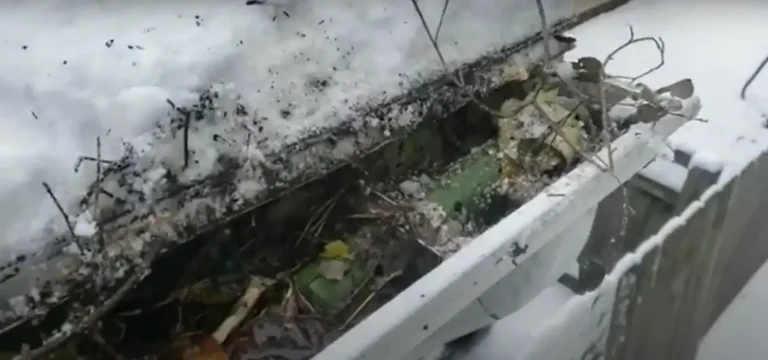
Winter storms damage gutters differently. Heavy snow sliding off the roof can bend gutters forward or rip out hangers. When snow melts over a warm attic and refreezes at the cold roof edge, it builds an ice dam that fills the gutter with solid ice. That weight can pull a whole run away from the house, and meltwater backing up under the shingles can leak into ceilings and walls.
Signs to watch for: thick ridges of ice along the roof edge, long icicles, gutters tilting outward, and water stains on ceilings near outside walls. Don’t chip ice off gutters with a hammer or shovel, as it’s easy to damage the gutter and shingles. See heated gutters and heat cable for long-term prevention.
Safe temporary fixes
- Move or add a downspout extension so water drains away from the foundation.
- Place a splash block or bucket under a spot where water pours over, to protect beds and the foundation.
- Clear leaves from ground-level downspout openings and drains by hand.
- Tie back, or ask someone to secure, a section that’s swinging in the wind, but only if you can reach it safely from the ground.
Anything on the roof edge, or above first-floor height, is best left for a professional with the right ladder and stabilizers.
Documenting damage for insurance
If you think a storm caused the damage, good records help whatever you decide to do:
- Photograph each problem from a few angles, with something in the frame for scale, before anything is moved or repaired.
- Note the date and type of storm, such as wind, hail or ice.
- Keep receipts for any temporary fixes or cleanup.
- Ask for a written repair estimate that describes the damage.
Whether gutter damage is covered, and whether it’s worth claiming, depends on your policy and deductible. Check with your insurer or agent; this guide isn’t insurance advice.
When to call for repair or cleaning
Call for a repair quote if a gutter has pulled away from the house, is hanging, leaks at new spots, or if a downspout has come off. Book a cleaning if the storm has filled your gutters with leaves, twigs or granules, because packed storm debris often causes the overflow in the next rain. See gutter repair and gutter cleaning for taller homes, or call (330) 777-1599 for a free quote.
Storm damage to your gutters? Get a repair quote.
Free quote, no obligation. Serving Akron and most of Summit County.
Frequently Asked Questions
Can wind alone pull gutters off a house?
Yes. Strong gusts can catch the gutter lip, especially on older gutters held by spikes or on runs that are already loose. Gutters fastened with hidden hangers into the rafters hold up much better.
Does hail damage gutters?
Large hail can dent aluminum gutters and downspouts. Small dents are mostly cosmetic, but dents that make water pool, or cracked seams, should be repaired.
Should I clean my gutters after every storm?
Not every storm, but check them after strong wind or heavy leaf fall. If you see debris in the gutters or water spilling over in the next rain, they need cleaning.
Is it safe to remove ice from my gutters myself?
It’s best not to chip or pry ice from gutters or the roof edge. It can damage shingles and gutters and is risky on a ladder. Improving drainage and adding heat cable on problem areas are safer long-term fixes.
How quickly should storm damage to gutters be fixed?
Anything hanging, detached or leaking behind the gutter should be fixed as soon as possible, because the next rain sends water into the fascia, walls or foundation. Dents and minor drips can usually wait a little longer.