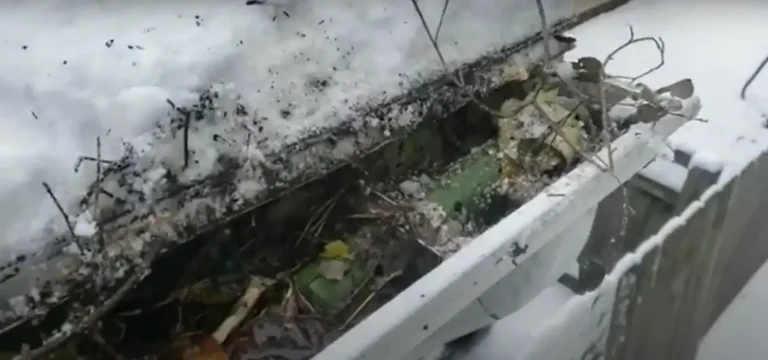
Clogged Downspouts: Causes, Fixes and Downspout Flushing
A clean gutter that drains into a blocked downspout still overflows. Here’s how to spot it and clear it.
Why the downspout matters more than the gutter
A gutter is just a channel. The downspout is what actually moves water away from your house. When a downspout clogs, the gutter above it fills, overflows at the front edge and dumps water straight down next to the foundation. In Northeast Ohio, with clay soils and many older block basements, that is how a lot of wet basement walls begin.
Downspouts also clog in a way gutters don’t: debris compacts in the bends, out of sight, so a gutter can look clean from the ground while the downspout below it is solid.

Signs your downspout is clogged
- Water spills over the gutter near the downspout during rain, but not elsewhere.
- Little or no water comes out of the bottom during a storm.
- A gurgling sound, or water bubbling out of a seam partway down.
- The downspout bulges, splits or pulls off the wall in winter, a sign it froze solid.
- Plants or seedlings growing in the gutter at the downspout opening.
- Stains, erosion or a puddle at the base, or a damp patch on the basement wall behind it.
What clogs downspouts
- Leaves and maple seeds that wash in and jam at the top elbow.
- Pine needles, which mat together into a plug.
- Shingle grit from aging asphalt roofs, which settles in the bottom elbow like sand.
- Nests from birds and wasps in spring.
- Ice, when water standing on a partial clog freezes.
- Crushed or bent elbows from ladders, lawnmowers or snow.
How downspout flushing works
- Clear the top. Debris is pulled out of the gutter outlet by hand.
- Flush from the top with a hose and nozzle. If water backs up, the clog is lower down.
- Break the clog with a plumber’s snake or a pressure jet pushed up from the bottom elbow. Tapping the downspout helps loosen packed debris.
- Take it apart if needed. Stubborn clogs in the bottom elbow are cleared by removing the elbow, then refitting it.
- Test. Water should run freely from top to bottom and come out of the extension away from the house.
Underground drain lines that take downspout water to the street or a dry well can clog too. Those need a drain cleaning service with a camera.

How to keep downspouts clear
- Clean the gutters before the downspouts get loaded, especially in late spring and late fall. See when to clean gutters in Akron.
- Fit a downspout strainer or gutter guards so leaves don’t enter in the first place.
- Use larger 3×4-inch downspouts on long or steep roof runs.
- Add extensions or splash blocks that carry water at least 4 to 6 feet from the foundation.
- Add downspout heat cable where a downspout freezes every winter.
DIY or call a pro for a clogged downspout?
Reasonable DIY:
- Clearing the bottom elbow on a single-story downspout
- Flushing from the top on a single-story home with a stable ladder
- Refitting a knocked-off extension or splash block
- Adding a strainer at a reachable outlet
Better left to a pro:
- Any outlet or elbow above the first story
- Clogs that a hose and snake will not clear
- Downspouts that are split, crushed or pulling away from the wall
- Water backing up into an underground drain
- Downspouts that freeze every winter
A clogged downspout is usually a symptom, not the whole problem. If gutters overflow at the same corner every storm, the fix may be a larger downspout, an extra downspout, guards, or a re-pitched gutter run. A crew that cleans, tests and inspects the whole system in one visit can tell you which.
Homeowners across Akron, Cuyahoga Falls, Stow, Tallmadge, Green and Barberton can book downspout flushing with any TopCare gutter cleaning. Call (330) 777-1599 for a quote.
Downspouts backing up? Get them flushed and tested.
Free quote, no obligation. Serving Akron and most of Summit County.
Anatomy of a downspout
Knowing the parts makes it easier to find where a clog is:
| Part | What it does | Common problem |
|---|---|---|
| Outlet (drop) | Connects the gutter to the downspout | Leaves and seeds jam here first |
| Top elbows | Bend the downspout back to the wall | Debris catches in the bends |
| Downspout section | Carries water down the wall | Dents, loose straps, freezing |
| Bottom elbow | Turns water away from the wall | Shingle grit settles here like sand |
| Extension or splash block | Carries water away from the foundation | Missing, too short or knocked off |
| Underground drain | Takes water to the yard, a dry well or the street | Roots, silt, crushed pipe |
Where the downspout fits in the gutter system
Illustration: the parts of a typical K-style gutter system.
Is your downspout the right size?
Sometimes a downspout that overflows is not clogged at all. It is too small for the roof area it drains, so it cannot keep up in a heavy storm.
| Downspout size | Roughly drains | Typical use |
|---|---|---|
| 2×3 inch | About 600 sq ft of roof | 5-inch gutters on smaller roofs |
| 3×4 inch | About 1,200 sq ft of roof | 6-inch gutters, two-story homes, steep roofs |
| 3-inch round | Similar to 2×3 | Half-round gutters on older homes |
| 4-inch round | Similar to 3×4 | Larger half-round systems |
Long gutter runs often need a downspout at each end. Use the downspout calculator to check your home.
Check your downspout size
Enter the roof area that drains to one downspout to see which size handles it.
Akron Downspout Calculator
Find the right gutter and downspout size for Northeast Ohio's heavy summer storms and spring snowmelt.
Downspout flushing in Northeast Ohio: step by step
- Clean the gutter first. There is no point flushing a downspout that will refill from a packed gutter.
- Clear the outlet by hand. Pull out leaves and seeds at the top opening.
- Run water from the top. Put a hose into the outlet at full pressure. If water backs up, note how far down the clog is.
- Work from the bottom. Remove the bottom elbow if it is screwed on, and clear grit and debris from there.
- Use a plumber’s snake or a sewer jetter nozzle pushed up from the bottom to break up a clog in the middle.
- Tap the downspout gently with a rubber mallet to loosen packed debris.
- Refit and seal elbows, secure loose straps, and refit the extension.
- Test again. Water should pour out of the extension in a strong, steady stream.
On a two-story home, steps 2 and 3 mean working at the top of a tall ladder. Most homeowners leave that to a crew; downspout flushing is included in every TopCare gutter cleaning.
Signs the underground drain is clogged
- The downspout flows freely, but water backs up and spills where it enters the ground
- A soggy patch, sinkhole or pooling in the lawn along the drain line
- Water bubbling out of the ground near the house in heavy rain
- No water coming out at the drain outlet or curb during storms
- Tree roots nearby, especially willows and silver maples
Underground lines need a drain cleaning company with a jetter and camera. Some older homes have downspouts tied into underground lines that connect to storm or sewer systems; check with the city before disconnecting or rerouting them.
Downspout extension options
| Option | Pros | Cons |
|---|---|---|
| Splash block | Cheap, simple | Only moves water a short distance |
| Hinged or roll-out extension | Flips up for mowing | Easy to forget to put back down |
| Flexible or fixed extension (4 to 10 ft) | Moves water well away | Can be tripped over or crushed |
| Underground drain to daylight | Hidden, moves water far | Can clog; needs a downhill outlet |
| Dry well | Hidden, soaks water into the ground | Clay soils in Summit County drain slowly |
| Rain barrel | Saves water for the garden | Overflows in big storms; must be drained before winter |
Whatever you choose, water should land at least 4 to 6 feet from the foundation on ground that slopes away from the house, and should not drain onto a neighbor’s property, a sidewalk or a driveway where it can freeze.
Frozen and burst downspouts
In Northeast Ohio winters, a downspout with a partial clog holds water that freezes, expands and splits the seams. You may see:
- Bulging or split downspout sections in spring
- Icicles hanging from the gutter at the outlet
- Ice building up on the ground at the base
To prevent it, keep downspouts fully clear before winter, make sure bottom elbows drain freely and are not buried in snow, and add downspout heat cable on the ones that freeze every year.
Downspouts and wet basements
Clay-heavy soils around Akron drain slowly, and many homes have older block or stone foundations. When a downspout dumps roof water right beside the house, the soil saturates and water presses against the basement wall. Before paying for basement waterproofing, check that:
- every gutter and downspout is clear and flowing,
- every downspout has an extension carrying water away,
- the ground slopes away from the house for several feet.
These fixes are cheap and often solve damp basement walls on their own.
Professional downspout cleaning and debris removal
Professional downspout cleaning and debris removal goes further than a hose from the top. A typical visit includes:
- Cleaning every gutter by hand so nothing washes straight back into the downspouts
- Clearing each outlet and top elbow
- Flushing each downspout from the top and, where needed, from the bottom
- Breaking up packed clogs with a snake or jetter nozzle
- Removing, clearing and refitting bottom elbows packed with grit
- Re-securing loose straps and resealing leaking joints
- Refitting or adding extensions so water clears the foundation
- Bagging and hauling away all debris
- A final water test, with photos of each downspout running clear
If the crew finds that water backs up underground, you get a note and photos so a drain specialist can follow up.
How to keep downspouts from clogging again
- Time your cleanings for after the spring seed drop and after the fall leaf drop. See when to clean gutters in Akron.
- Fit outlet strainers on downspouts that clog every year. Check them often; a full strainer blocks water too.
- Install gutter guards so debris never reaches the outlet. Fine micro-mesh stops maple seeds and pine needles. See gutter guards.
- Upsize to 3×4-inch downspouts on long or steep runs; larger downspouts clog far less.
- Use fewer elbows where possible, and wider ones where the run bends around a corner.
- Trim overhanging branches to cut the debris load.
- Check after storms, when twigs and leaves wash in all at once.
If downspouts are bent, split or pulling off the wall, see gutter repair.
Frequently Asked Questions
Can I unclog a downspout myself?
Ground-level clogs at the bottom elbow are often easy to clear with a hose or by removing the elbow. Clogs high on a two-story downspout mean working from a ladder, which is safer to leave to a pro.
Is downspout flushing part of gutter cleaning?
It should be. Every TopCare gutter cleaning includes flushing and testing each downspout.
Why does my downspout freeze every winter?
Usually because water sits on a partial clog and freezes, or because the downspout drains into a spot that stays shaded and icy. Clearing the clog and adding heat cable or a better extension usually fixes it.
How do I know if the underground drain is clogged?
If the downspout itself flows freely but water backs up where it enters the ground, the buried line is the problem and needs a drain service.
What is gutter flushing?
Running water through gutters and downspouts after the debris is removed, to wash out grit and confirm everything drains. It is the final step of a proper gutter cleaning.
Should downspouts be connected to the sewer?
In some older homes they are. Rules vary by city, so check with your local public works department before connecting, disconnecting or rerouting a downspout.
How far should a downspout extension go?
At least 4 to 6 feet from the foundation, onto ground that slopes away from the house.
Why does water come out of my downspout seams?
Usually a clog lower down. Water backs up and escapes through the nearest joint. Clear the clog and reseal the joint.