
Heated Gutters & Heat Tape Installation in Akron, OH
Gutter heating cable for roofs that ice up every winter. Keeps a channel open so meltwater drains instead of backing up under your shingles.
Why Akron gutters freeze
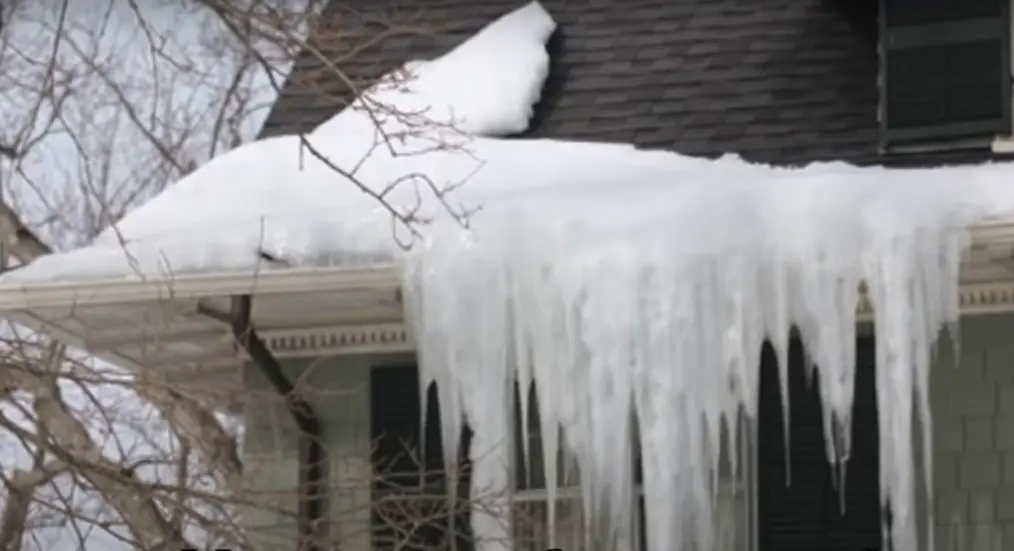
Northeast Ohio winters swing above and below freezing again and again. Snow on the roof melts from the heat of the house, runs down to the cold eaves and gutters, and freezes there. Each cycle adds another layer. The result is an ice dam: a ridge of ice that traps water behind it, pushes it under the shingles and into the attic, walls and ceilings. Frozen downspouts make it worse, because the gutter has nowhere to drain.
Heat tape for gutters, also called gutter heating cable or heated gutters, keeps a path open through the ice so meltwater keeps flowing off the roof and down the downspout. TopCare arranges heat tape installation in Akron and nearby Summit County towns.
Check your home's ice-dam risk
Answer five quick questions about your roof to see how likely ice dams are and whether heat cable is worth considering.
Ice Dam Risk Calculator
How heated gutters work
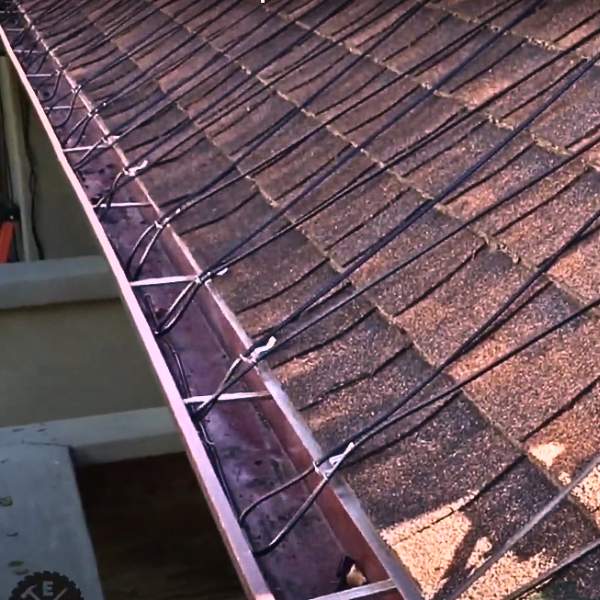
- Roof edge cable runs in a zigzag pattern along the bottom of the roof, above the gutter, so melting snow has a clear path into the gutter.
- In-gutter cable runs along the bottom of the gutter to keep it from filling with ice.
- Downspout cable drops down inside each downspout so water can leave the system. This is the part most do-it-yourself kits leave out.
- Controls: a simple switched outlet, or an automatic controller that turns the cable on only when it is cold and there is moisture, which keeps running costs down.
Self-regulating cable vs cheap heat tape
Self-regulating cable adjusts its heat output to the temperature along its length. It uses less power in milder spots, can safely cross over itself, and lasts many winters. It is what professional installers use for roofs and gutters.
Constant-wattage heat tape, the kind sold in clip-on kits, runs at full power all the time. It is cheaper to buy but costs more to run, can overheat if it overlaps, and tends to fail after a few seasons. For roof edges and gutters, self-regulating cable is worth the extra cost.
What installation includes
- Check the roof, gutters and downspouts and find where ice builds up.
- Clean the gutters, because cable laid in packed leaves will not do its job.
- Lay out and fasten the cable with roof clips and gutter clips made for the purpose, without nailing through the shingles.
- Run cable into each downspout serving the problem area.
- Connect to a GFCI-protected outdoor outlet and add a controller if wanted. If there is no suitable outlet, you are told before work starts so a licensed electrician can add one.
- Test the system before the first freeze.
Heated gutter cost in Akron
Price depends on how many feet of roof edge, gutter and downspout need cable, how high the work is, the cable type and whether a controller is added. Covering only the problem areas, such as north-facing eaves, valleys and the run over the front door, usually costs far less than cabling the whole house. You get a written quote first.
Running cost depends on cable length and how many hours it is on. An automatic controller keeps it on only in freezing, wet conditions.
Stop ice dams before the next freeze
Fall is the best time to install heat cable, before snow is on the roof.
Pair it with
Keep leaves out so the heated channel stays clear all winter.
Ice-damaged seams and hangers fixed before the cable goes in.
A month-by-month guide to keeping gutters clear before winter.
How ice dams form on Akron roofs
An ice dam starts inside the house. Heat escaping through the attic warms the roof deck, snow on the upper roof melts, and the meltwater runs down to the eaves. The eaves hang out past the warm walls, so they stay below freezing, and the water refreezes there. After a few freeze-thaw days the ice forms a ridge. Water then pools behind it and works under the shingles, into the attic, walls and ceilings.
Akron sees this pattern every winter: snow, a sunny day just above freezing, then a hard freeze at night. Shaded north-facing eaves, low-slope roofs, roof valleys and porches over heated rooms are the usual trouble spots.
Heat tape for gutters in Akron and nearby towns
Searches for heated gutters near me and heating cables for gutters spike across Summit County every December and January, usually right after the first ice dam leaks through a ceiling. The better time to call is October or November, before snow sits on the roof.
TopCare arranges heat tape for gutters in Akron and nearby communities including Barberton, Munroe Falls, Mogadore, Lakemore, Kent, Stow and Cuyahoga Falls. Homes that benefit most:
- Older homes with limited attic insulation, common in Akron neighborhoods built before the 1960s
- Low-slope and porch roofs over heated rooms
- North-facing and tree-shaded eaves that stay frozen for weeks
- Roof valleys where two roof planes meet and snow piles up
- Downspouts that freeze solid every winter and split at the seams
The crew starts by finding where ice actually builds on your roof, then quotes cable only for those runs. That keeps both the install cost and the running cost down.
Types of gutter heating cable compared
When heat tape installers talk about “heat tape” and “heating cable”, they may mean very different products:
| Self-regulating cable | Constant-wattage heat tape | Mineral-insulated cable | |
|---|---|---|---|
| How it heats | Output rises as it gets colder along each section | Same output everywhere, all the time | High, steady output |
| Can overlap or cross? | Yes | No; can overheat | No |
| Running cost | Lower; uses less power in milder spots | Higher | Highest |
| Typical lifespan | Many winters | A few seasons | Very long |
| Best for | Roof edges, gutters and downspouts on homes | Short temporary fixes | Commercial roofs and large systems |
For homes, self-regulating cable is the standard choice from professional gutter heater installers.
How heat cable is laid out
- Roof edge zigzag: cable runs up and down in triangles along the bottom of the roof, usually reaching a little past the warm wall line, to keep channels open in the snow.
- In the gutter: a run along the bottom of the gutter keeps a channel open for meltwater.
- Down the downspout: cable drops all the way down and slightly past the outlet, so water can leave the system.
- Valleys: a run up each valley, where the most snow and water collect.
- Clips, not nails: roof and gutter clips made for heat cable hold it without holes in the shingles.
Controls and running cost
| Control option | How it works | Good for |
|---|---|---|
| Switched outlet | You turn it on and off | Small systems, owners who watch the weather |
| Thermostat | On below a set temperature | Simple automatic control; may run on dry cold days |
| Temperature + moisture sensor | On only when it is cold and wet or snowing | Lowest running cost; most automatic |
Running cost depends on cable length, how many hours it runs and your electric rate. Self-regulating cable on an automatic sensor, covering only the problem areas, keeps the bill modest compared with one water-damage repair.
Electrical safety
- Heat cable must plug into a ground-fault protected outdoor circuit. Electrical codes require ground-fault protection for roof and gutter de-icing equipment.
- Use cable and connection kits rated for outdoor and roof use, never indoor extension cords.
- Keep connections and plugs off the roof surface and out of standing water.
- If the nearest outdoor outlet is far from the roof line or not protected, a licensed electrician should add a dedicated circuit. You will be told during the quote.
Heat cable alternatives and add-ons
- Attic insulation and ventilation: the long-term fix, because it stops the heat loss that causes ice dams. Worth an energy audit if ice dams are widespread.
- Roof rake: pulling snow off the bottom few feet of the roof after storms helps, but is hard work and risky on two-story homes.
- Gutter guards: keep leaves out so heated channels stay open. See gutter guards.
- Heated gutter panels: aluminum panels with built-in heat elements along the roof edge. Neater looking, but cost more than cable.
- Calcium chloride ice melt: useful for emergencies on a dam already formed. Avoid rock salt, which damages roofing and plants.
Roof heat tape installers near me: what to ask
When you compare roof heat tape installers near me or companies offering gutter heat tape installation near me, ask:
- Is the cable self-regulating, and what brand and wattage?
- Where exactly will it run: roof edge, gutters, downspouts, valleys?
- How is it attached to shingles, metal roofing or gutters?
- What control do you recommend, and why?
- Is the outlet ground-fault protected, or is an electrician needed?
- Will gutters be cleaned first?
- What warranty covers the cable and the installation?
Affordable heated gutters usually mean covering only the spots that ice up every year, not the whole house.
Frequently Asked Questions
Does heat tape stop ice dams completely?
Heat cable keeps drainage paths open so meltwater can escape, which prevents most ice dam leaks. Ice dams start with heat escaping through the roof, so attic insulation and ventilation are the long-term fix. Heat cable is the practical fix for problem spots.
Should heat tape go in the gutter or on the roof?
Usually both. Roof edge cable lets water reach the gutter, in-gutter cable keeps the gutter open, and downspout cable lets water leave. Missing any one part leaves a place for ice to build.
Can heat cable be installed with gutter guards?
Yes. Many guards are compatible with in-gutter cable, and the combination is common on homes with heavy tree cover and chronic ice.
When should heated gutters be turned on?
With a manual switch, turn the cable on when snow is forecast or ice starts forming, and off when the roof is clear. An automatic controller does this for you.
Do I need an electrician?
Only if there is no GFCI-protected outdoor outlet near the roof line. You are told during the quote if one is needed.
Can you install heat tape in winter?
Yes, on dry days without ice on the roof. Fall installation is easier and avoids working around snow.
Do heated gutters really work?
Yes, when the cable covers the roof edge, the gutter and the downspout. Partial systems that only heat the gutter often leave ice on the roof edge and in the downspout.
How long does gutter heat cable last?
Quality self-regulating cable usually lasts many winters. Cheap constant-wattage tape often fails after a few seasons.
When should heat tape be turned on?
Before snow or freezing rain, not after a thick ice dam has formed. An automatic sensor handles this for you.
Can heat tape go on a metal roof?
Yes, with clips designed for metal roofing. On metal roofs, snow guards are often installed too.
Is heat tape a fire risk?
Products rated for roof and gutter de-icing, installed correctly on a ground-fault protected circuit and never overlapped (for constant-wattage tape), are designed for this use. Old or damaged tape should be replaced.
Heated gutter installation near you
Available in Akron and nearby towns including Munroe Falls, Barberton, Mogadore, Lakemore, Kent and Stow. See all service areas.